×

The Standard e-Paper
Fearless, Trusted News
 The Standard Group Plc is a
multi-media organization with investments in media platforms spanning newspaper
print operations, television, radio broadcasting, digital and online services. The
Standard Group is recognized as a leading multi-media house in Kenya with a key
influence in matters of national and international interest.
The Standard Group Plc is a
multi-media organization with investments in media platforms spanning newspaper
print operations, television, radio broadcasting, digital and online services. The
Standard Group is recognized as a leading multi-media house in Kenya with a key
influence in matters of national and international interest.

Audio By Vocalize
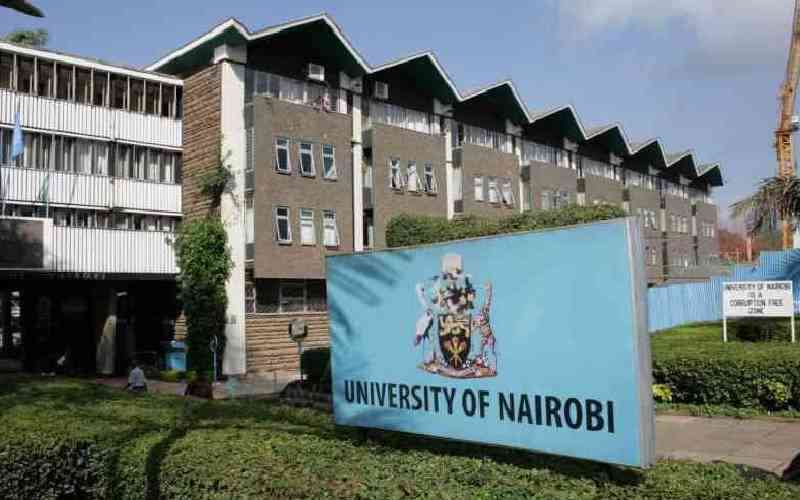
Kenya’s higher education sector is undergoing its most humiliating low. Once celebrated as engines of social mobility and intellectual growth, public universities have become symbols of fiscal recklessness, policy confusion, and institutional decay.
The revelation that ten universities are effectively insolvent and that most of them are drowning in over Sh100 billion in debt, should not just alarm policymakers; it should prick the conscience of every Kenyan who believes education is the ladder out of poverty.
When public institutions, admired as citadels of knowledge, are no longer just struggling but actually suffocating, it sends shivers in the next generation. Pending bills are piling up, projects lie abandoned, and essential services are under threat. The latest government’s scramble for an emergency Sh14.3 billion bailout is not a solution; it is an admission of failure.
This crisis did not happen overnight but is the result of years of systemic neglect. Student enrolment has surged without a matching increase in funding. Universities expanded aggressively, opening satellite campuses and launching programmes, without sustainable financial models. Meanwhile, government capitation has stagnated, if not declined in real terms, even as operational costs soar.
The consequences are already unfolding. Students face delayed exams, disrupted learning, and uncertainty over their future. The paralysis at the Higher Education Loans Board has only worsened the situation, leaving thousands without upkeep funds. Private universities, owed a staggering Sh60 billion, are on the brink, exposing a sector-wide collapse that cuts across public and private institutions.
However, merely throwing money at the problem will not fix it. Kenya must confront uncomfortable truths and embrace bold education reforms. First, universities must undergo a ruthless audit and restructuring process. Deadweight programmes and duplicated courses should be scrapped. Not every institution needs to offer every course. Specialisation, not expansion, should define the future.
Second, governance must be overhauled. University councils have too often operated as political extensions rather than professional oversight bodies. Appointments should be merit-based, with strict accountability frameworks. Vice-chancellors must be held responsible not just for academic output, but also for financial prudence.
Third, diversify revenue streams. Universities must stop relying almost entirely on tuition and government funding. Partnerships with industry, research commercialisation, alumni endowments, and international collaborations can unlock new income channels.
Fourth, reimagine funding. The current model is broken. A performance-based funding framework—where institutions are rewarded for efficiency, research output, and graduate employability—could restore discipline and incentivise excellence.
Finally, digitisation and cost efficiency must be embraced. Blended learning, shared services across institutions, and procurement reforms can significantly cut operational costs without compromising quality.



Subscribe to our newsletter and stay updated on the latest developments and special offers!






 join
join