×

The Standard e-Paper
Read Offline Anywhere
 The Standard Group Plc is a
multi-media organization with investments in media platforms spanning newspaper
print operations, television, radio broadcasting, digital and online services. The
Standard Group is recognized as a leading multi-media house in Kenya with a key
influence in matters of national and international interest.
The Standard Group Plc is a
multi-media organization with investments in media platforms spanning newspaper
print operations, television, radio broadcasting, digital and online services. The
Standard Group is recognized as a leading multi-media house in Kenya with a key
influence in matters of national and international interest.
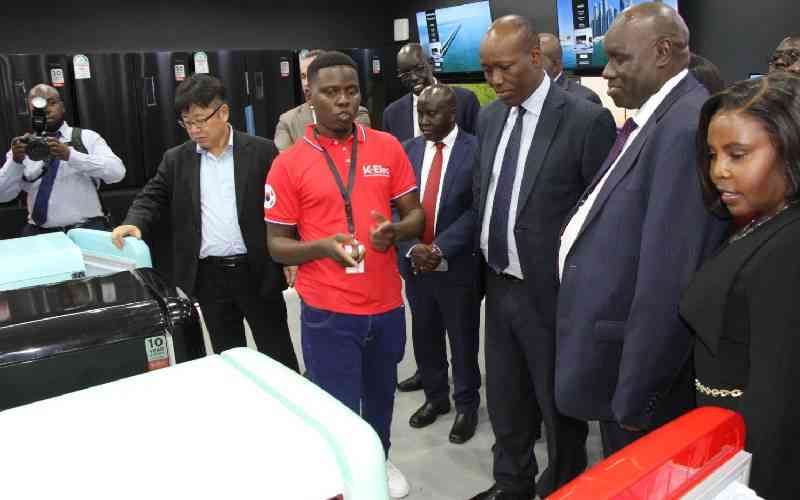
Kenya has upped its ante in the local production of electronics, with firms such as K‑Elec Kenya launching a new assembly plant in Syokimau.
The firm produces televisions and refrigerators locally with designs and core technology from Korea, alongside expert training from technicians drawn from around the world. The facility currently produces TVs with attached soundbars, mini-refrigerators, chest freezers, and fridges, with plans to expand into washing machines, microwaves, air fryers, and other home appliances, signalling a push for more locally made electronics and skills development.
The launch addresses a long-standing gap in the local market. Most electronics in Kenyan homes have historically been imported, leaving little room for homegrown production.
Speaking at the event, Cabinet Secretary for Investments, Trade and Industry, Lee Kinyanjui, highlighted the absence of local electronics. “I would challenge anyone here with a made-in-Kenya TV to stand up. There would be none,” he said.
“We don’t even have one per cent of the electronics market. That should tell you the size of the opportunity.”
The plant represents both a technical and industrial milestone.
Chief Financial Officer and co-founder Nicole Langat Belio said that when Kenyans support their own, industries grow, and jobs are created. The company aims to blend world-class Korean engineering with local expertise, creating reliable products while building technical skills among Kenyan workers.
K‑Elec Kenya Chief Executive Nam Kyo Jung emphasised the importance of training: “We brought Korean technology here, then brought global masters to train Kenyan technicians. We want world-class quality made in Kenya.”
He added that the factory is not only about assembling products but also about transferring knowledge and skills to the local workforce, with plans to expand the product range over time.
The factory’s founder Dr David Langat highlighted his journey after venturing into the electronics business in 1988. “I used to buy TVs and fridges from ships in Mombasa, even carrying them down myself. That journey is what brought us here today,” he noted
He outlined plans to scale production further and expand across the region, including Uganda and Tanzania, signalling ambitions beyond Kenya’s borders.
South Korean Ambassador Kang Hyung-shik noted the broader significance for bilateral relations and noted that he expects more opportunities for economic cooperation between Korea and Kenya.
Investment Principal Secretary Abubakar Hassan described the plant as a real testimony to converting investment inquiries into actual deals.
Stay informed. Subscribe to our newsletter





Subscribe to our newsletter and stay updated on the latest developments and special offers!







 join
join