×

The Standard e-Paper
Fearless, Trusted News
 The Standard Group Plc is a
multi-media organization with investments in media platforms spanning newspaper
print operations, television, radio broadcasting, digital and online services. The
Standard Group is recognized as a leading multi-media house in Kenya with a key
influence in matters of national and international interest.
The Standard Group Plc is a
multi-media organization with investments in media platforms spanning newspaper
print operations, television, radio broadcasting, digital and online services. The
Standard Group is recognized as a leading multi-media house in Kenya with a key
influence in matters of national and international interest.

Audio By Vocalize
Prof Anyang' Nyong'o's "Road to Singapore" deserves serious reading because it arrives when Kenya is preparing to leave Vision 2030 behind. Public debt is pressing against national ambition, young people are entering an economy that cannot absorb them properly, and President William Ruto is searching for a longer development story than annual Finance Bills can provide.
Nyong'o's central argument is difficult to dismiss. Kenya has had many false starts. We have written plans, created institutions, built roads, changed governments and announced fresh beginnings, yet the country has not crossed into the productive depth expected of a high-income industrial society.
Nations that transform do not stumble into prosperity. They protect continuity, discipline implementation and hold a national purpose long enough for one generation to hand it to another.
That argument carries particular weight coming from him. Nyong'o was part of the intellectual imagination that gave Kenya the National Economic and Social Council and later Vision 2030. He also comes from a social democratic tradition that should understand development as something deeper than growth figures and investor confidence. Road to Singapore should be welcomed with respect, but not received with folded hands.
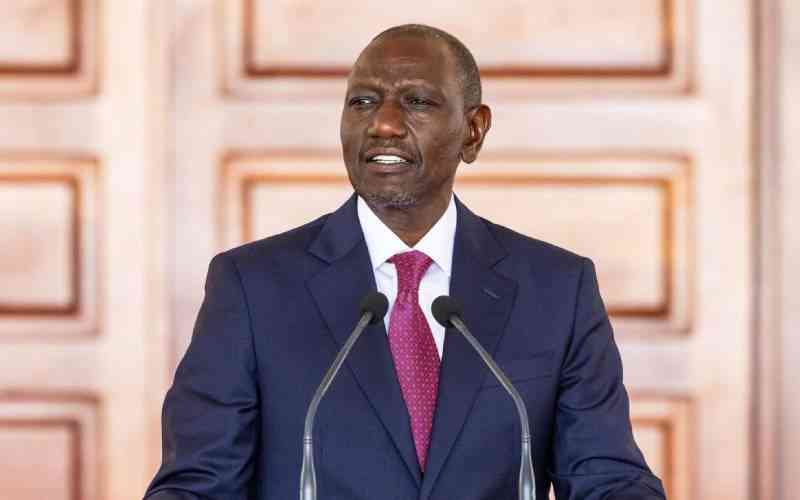
President Ruto seems to agree with the diagnosis, at least in principle. Receiving the report at State House last week, he said "development cannot be the project of one administration," and that no election should force the country to abandon one vision to start another. That is the right instinct. It is also a promise that can be held against him. A president who says this in July should not be the same president reorganizing priorities around a different slogan in 2028.
The question is not whether Kenya needs long-term planning. The evidence of drift is already before us. The question is whether the next plan will escape the old development imagination that has survived many governments. Sessional Paper No. 10 of 1965 had its historical moment, but it also left behind a center-periphery instinct in which development moved first to areas considered ready, while other regions were asked to wait.
Kenya cannot approach 100 years of Independence with that imagination repackaged in “first-world” language. A post-Vision 2030 plan must do more than improve coordination from above. Citizens need to become producers, workers, taxpayers, rights-holders and co-authors of the republic's future, not the audience for a plan written mainly through State House, experts and delivery units. Cleverness is not national ownership.
Bottom-Up gave Ruto a language for this problem before Road to Singapore existed, and the harder task now is protecting that idea from being swallowed by top-down planning. It cannot remain a campaign identity, a loan program, or a convenient phrase for ordinary people's pain. Taken seriously, it should force planning to begin where Kenyans actually live and work: farms, markets, workshops, boda boda stages, informal settlements, schools, clinics and county economies.
That is where Road to Singapore needs a sharper political economy. Kenya's problem is not only that plans were interrupted. Somebody gains when production stays weak, when imports displace domestic industry, when healthcare becomes a private market, when labor stays informal and unprotected, when infrastructure becomes a contract pipeline rather than a public good, and when debt finances projects without deepening the tax base underneath them. Development fails by accident sometimes. It also fails because failure pays certain people, and naming who benefits is not cynicism, it is due diligence.
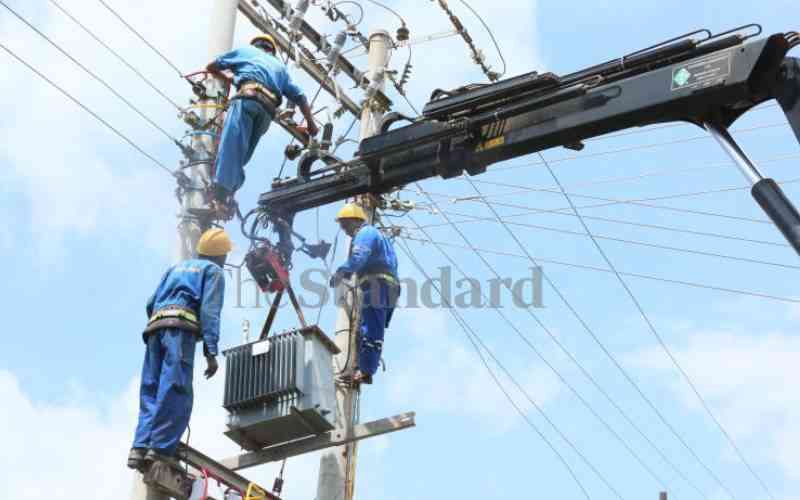
The missing national bargain begins with production. Debt can build roads, dams and power lines, but only production fills them with goods, jobs, exports and public revenue. Agriculture has to move beyond raw output and weak farmer bargaining. Manufacturing has to move beyond assembly and trading margins. Mining must stop exporting raw value while communities absorb the environmental damage. And energy should be planned for factories, irrigation, cold chains and hospitals, not merely counted as connection statistics on a scoreboard.
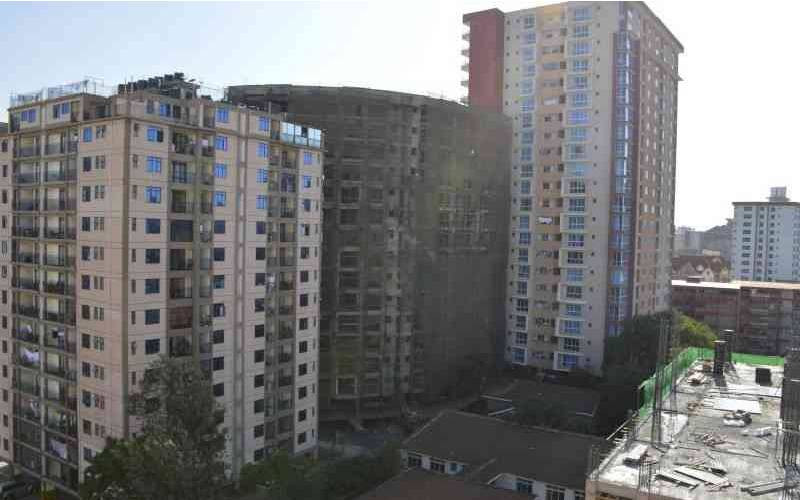
The same bargain has to show up in public goods. A first-world Kenya cannot mean a skyline above citizens who still buy survival privately. Healthcare should work in public facilities before illness becomes a fundraiser. Schools should not sort children by their parents' income. Reliable water needs to be the normal experience, not something bought from a vendor's truck. Labor needs bargaining power, not just the freedom to survive informally.
Infrastructure also needs a different discipline. Kenya does not need another catalogue of visible projects. It needs a National Grid that lowers the cost of life and production: rail carrying freight and passengers where rail makes economic sense, roads connecting rural producers to markets and clinics and schools, water systems built for households and factories at once, digital infrastructure that serves farmers and manufacturers rather than just app downloads. Judge a project by what it removes, not by its ribbon-cutting: distance, cost, time, risk, exclusion.
Public finance is where the social contract becomes hardest to hide, and it is also where Road to Singapore's own numbers make the case better than its authors seem to notice. Their report shows public debt rising from 42 per cent of GDP in 2008 to over 65 per cent by 2023, and debt service now consuming close to 68 per cent of government revenue. A state that spends two-thirds of its revenue servicing debt has very little left to argue with when it goes back to citizens for more tax. Kenya needs a transparent, independent audit of how that debt was contracted and spent, not as an act of confrontation but as the basic accounting any household would demand before agreeing to keep paying. It needs a tax base built from expanding production and formalizing enterprise, not from squeezing an economy that is still mostly informal. And it needs a public finance law that ties borrowing to the same national development plan Nyong'o is proposing, so that debt stops being a parallel track running alongside development rather than underneath it.
Stay informed. Subscribe to our newsletter
Road to Singapore is also silent on something Kenyans experience daily and Vision 2030 could never quite name either: public safety. A plan for governance and integrity that says nothing about policing, about IPOA's weak enforcement powers, or about a defense force increasingly drawn into internal security work, has left out a piece of the state that ordinary people meet more often than they meet a delivery secretariat. A first-world Kenya is not only a Kenya with functioning courts and clean tenders. It is a Kenya where the police are not the thing people fear more than the crime.
None of this rejects state capability. Kenya badly needs a capable state, and Nyong'o is right to revive planning discipline, institutional continuity and a NESC-type structure. But the next NESC should be anchored in something more binding than good intentions: a National Program of Development, set in law, that ties production, public goods, infrastructure, public finance and security together under one long-term framework, protected from the reshuffling that comes with every new minister and every new election cycle. Without that legal spine, each of these sectors will keep being planned as if the others do not exist, which is precisely the fragmentation Vision 2030 never solved.
Road to Singapore has opened the right conversation. Its ambition deserves respect. But Kenya does not merely need a post-Vision 2030 plan. It needs a post-Sessional Paper No. 10 development imagination, one that combines state capability with democratic ownership, production with public goods, infrastructure with spatial justice, public finance with a renewed social contract, and sovereignty with material control over national life. Kenya at 100 should not arrive through another plan written above the heads of its people. The country needs a development bargain that citizens can recognize as their own, and a president willing to be held to his own words about what outlasts an administration.
-George Nyongesa is a lecturer of philosophy and logic at University of Nairobi and Chuka University




Subscribe to our newsletter and stay updated on the latest developments and special offers!






 join
join