×

The Standard e-Paper
Smart Minds Choose Us
 The Standard Group Plc is a
multi-media organization with investments in media platforms spanning newspaper
print operations, television, radio broadcasting, digital and online services. The
Standard Group is recognized as a leading multi-media house in Kenya with a key
influence in matters of national and international interest.

Audio By Vocalize
The Federal Reserve Board, simply referred to as the Fed, held against political pressure to retain the benchmark rate for the United States (US) economy within the target range of 3.75 to 4 per cent this past week. Effective rates will average 3.88 per cent.
This is significant news for international financial markets given that the US heads to the polls for the mid-term elections on November 3, to decide which political formation between Republicans and Democrats gets control of both the Congress and the Senate.
As at the time of writing this article, opinion polls converge towards a decisive win to control the Congress by the Democrats, with a good chance to flip the Senate too. Several gubernatorial seats are also up for grabs. There are good reasons why these events in the US matter a lot to economic policy makers and students of foreign policy.
First, the US is the only economy in the world that has full control over its monetary policy. Previously, this column has explained a phenomena called the Impossible Trinity or Trilemma in international finance. Trilemma simply means that no country can attain control of its monetary policy, exchange rates and balance of payments at the same time.
Thus, a country has to choose a maximum of two of these macroeconomic variables to regulate and leave the other to the market forces of demand and supply. The US controls monetary policy and lets the other two float. That explains why President Trump trade tariffs caught the rest of the world off-guard.
The outcome of the election night on Tuesday, therefore, will be significant not only to Americans who disagree with Trumpism, but also to majority of other citizens of the world. If Democrats take control of both Houses on Tuesday night, then the excesses of President Trump will significantly be curtailed through legislative oversight.
Secondly, Democrats have also hinted to the possibility of initiating investigations on what they term as massive corruptions at the highest echelons of power in contravention of the law and well established traditions passed on to generations from its founding fathers.
While the US has for a long time carried itself as the moral police for the world, it is unimaginable that corruption would be used in the same sentence with government in one of the world’s largest democracies.
If it is true that there has been widespread official corruption in the US, then what will emerging and developing world say about the vice? Poor citizens of the emerging world use the US as their gold standard for ethical leadership in government.
After all, the US dollar is the world’s currency. If Democrats gains clear majority to control both Houses, there is a good possibility that the investigations into this allegations could expose the US’s underbelly.
More importantly, it is interesting to see States that have traditionally been safe deep Red States turn into toss-up category days to the ballot. Good examples are Texas, Alaska, Iowa and Kansas States. This demonstrates why good candidate choices for political parties counts a lot in addition to changing voter demographics across many countries.
The Kenyan capital markets have already picked the signals and has been reflected in both regulatory and corporate policy briefs. In recent months, the domestic economy experienced notable foreign investor outflows and heavy foreign selling pressure due to global macroeconomic pressures, inflation and shifting bond yields, especially with high returns in the US markets. This buys the local markets a grace period to adjust to post-US mid-term policy shifts.
On the domestic trends, emerging data indicates that foreign currency holdings by wealthy individuals and corporations has surged to about Sh1.52 trillion. This points to early shifts in capital allocations to adjust for political risks due to the coming General Election, inflation and high yields in foreign capital markets.
Public debt is estimated to be about 70.6 per cent of the Gross Domestic Product (GDP), against the legal and policy target of no more than 55 per cent of the GDP. This ratio excludes off-balance sheet debts held with State-owned enterprises.
With the Fed opting for stability, this eases capital flight from the domestic economy, ensures continued stability for the shilling, slows down costs of foreign debt service and legitimises the Monetary Policy Committee rate, retained in its meeting on October 7, 2026.
Stay informed. Subscribe to our newsletter
The reasons why the rich and corporates opt to stockpile Forex currency is its hedge against perceived Forex risks, create buffers for supplies related to the campaign season and as a political season.
In Kenya, elections where the incumbent is in the ballot seeking a second term in office have been always tense and high contested. This is partly because of this unfounded myth that an incumbent cannot loose an election. Yet, it is time that political actors in the country must accept the emerging reality that the voters of today can easily kick-out non-performing leaders at any level of our politics.
Kenyans have been consistent in voting out legislators and governors for non-performance. The attrition rate in Parliament, County Assemblies and Governors has been extremely high in the past several election cycles.
If Kenyans can vote out these other roles, why not the presidency too. In fact, the earlier we get a first time for a president to be voted out, the better for the country as it would set a good precedent and a warning shot to future presidents.
In another world, this column has tracked economic growth trends for the country over the last six decades. The available evidence indicates the domestic economic has responded negatively to every election cycle and other internal politically related shocks since the Global Oil crisis of 1975. Therefore, the country has never experienced any continuous uninterrupted economic growth for more than five years since independence.
Election cycles in the country have particularly been detrimental to the country’s progress. Yet, citizen participation in democratic elections is the highest civic obligation for any citizen of this country.
Unfortunately, for our case, elections belong to and serve the selfish greed of political and bureaucratic elites of the country. They never have been about public interest, public good and posterity.
Nothing so far indicates it will be any different in August 2027. However, as the government engages in wanton waste of public resources seeking re-election, three things may moderate the severity of this aggression against the economy.
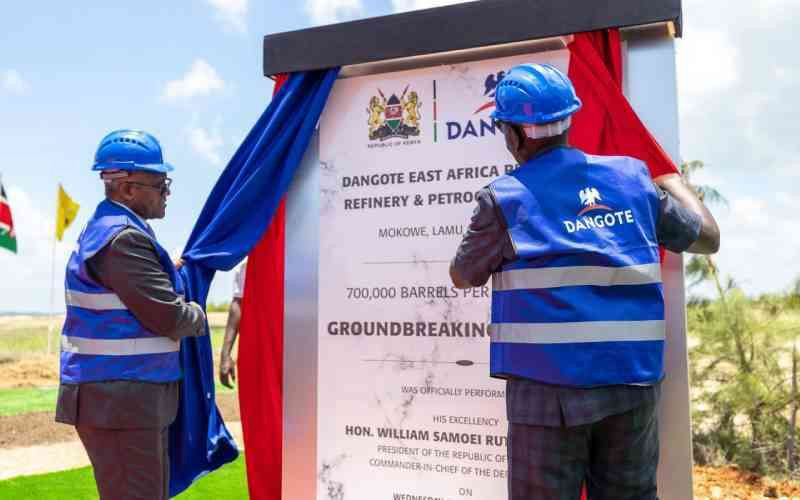
First is the private capital injections into the country. In addition to Dangote Oil Refinery, we have had other big-ticket cement industries launch in Nyeri and Kitui, in addition to the West Pokot plant. There is a chance that part of the money been invested has some political ties, but at the macroeconomic level this would create several formal jobs and ultimately feed into the tax basket in the long term.
Second is the opening match for the Talanta City. This column has previously disagreed with the model used and the opaqueness with which it has been handled with. However, a high-profile opening as proposed will be good our hospitality and tourism sector in the short and medium term. If these top European Football clubs bring along their fans, both from home and in the region into the city, it will be good for our domestic economy.
Finally, the Africa Cup of Nations (AFCON) days before the election may be a great event to mitigate political tensions, earn the domestic economy decent foreign currency and release tensions against political combatants. The magic of great sport events has a way of healing hearts, communities and nations!






Subscribe to our newsletter and stay updated on the latest developments and special offers!